


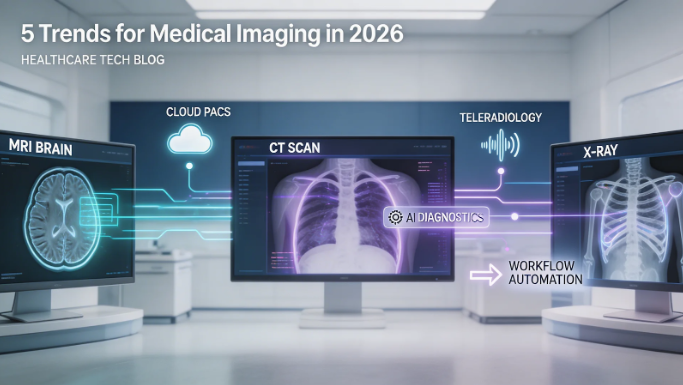
The evolution of medical imaging is accelerating at an unprecedented pace. As imaging volumes grow and healthcare systems expand across geographies, traditional PACS solutions are no longer sufficient to meet modern demands.
In 2026, the future of PACS is being shaped by AI integration, cloud scalability, and workflow intelligence all of which are embedded into next-generation platforms like RadpicsAI. These advancements are not just improving efficiency but redefining how radiology is practiced at scale. With global imaging volumes growing by nearly 5–7% every year, alongside a rising shortage of radiologists, the need for intelligent, automated imaging solutions has never been more critical.
1. Cloud-Native PACS Becomes the Standard
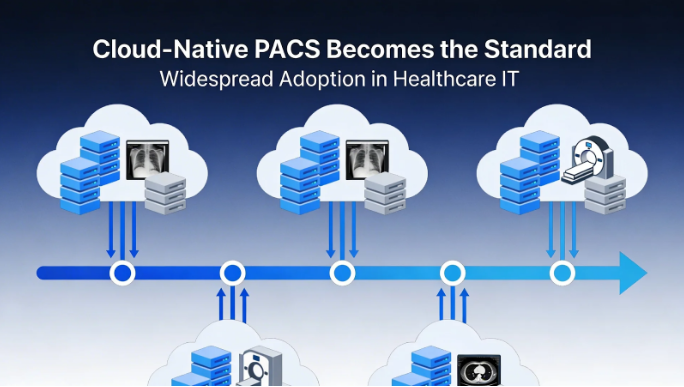
The shift from on-premise systems to cloud-native PACS is no longer optional—it is the foundation of modern imaging infrastructure. Cloud-based imaging enables healthcare providers to access and share data seamlessly across locations, supporting distributed radiology networks.
RadpicsAI is built as a cloud-native platform, allowing radiologists to securely access imaging data anytime, anywhere. This flexibility is critical as healthcare systems increasingly adopt remote reporting and multi-location operations.
At the same time, the industry is moving toward enterprise-wide imaging strategies, where PACS is no longer siloed within radiology but integrated across the entire healthcare ecosystem.
2. AI Becomes Core Infrastructure, Not an Add-On
In 2026, AI in radiology has moved beyond experimentation into full-scale deployment. Healthcare providers are now treating AI as a long-term infrastructure decision rather than a standalone tool.
RadpicsAI reflects this shift by embedding AI directly into its PACS environment—enabling:
- Intelligent case prioritisation
- Automated workflows
- AI-assisted diagnostics
AI-driven tools are also becoming standard across imaging departments, helping radiologists streamline workflows and improve diagnostic precision.
3. Rise of Unified Diagnostic Platforms
The future of PACS is no longer just about image storage—it is about creating a unified diagnostic workspace. Modern platforms are combining PACS, RIS, AI tools, and reporting systems into a single, integrated interface.
This shift is driven by the need for efficiency and better coordination across care pathways. Advanced platforms now offer:
- Smart worklists
- Real-time collaboration
- AI-enhanced reporting
- Workflow analytics
RadpicsAI aligns with this evolution by delivering a connected ecosystem where imaging, analysis, and reporting coexist seamlessly—eliminating the inefficiencies of fragmented systems.
4. AI-Powered Reporting & Radiology Workflow Automation
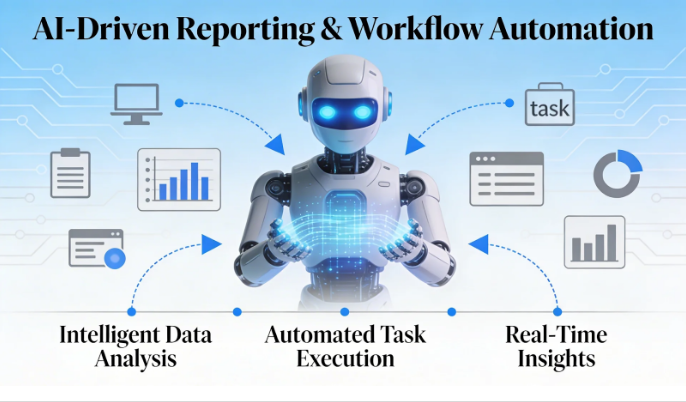
One of the most significant trends shaping PACS in 2026 is the rise of AI-assisted reporting. Emerging technologies, including vision-language models, are enabling faster report generation and structured outputs.
Additionally, AI is increasingly being used to handle repetitive administrative tasks, reducing the burden on radiologists and allowing them to focus on clinical decision-making.
RadpicsAI leverages this trend by automating key workflow processes—from case allocation to reporting—ensuring faster turnaround times and improved productivity across high-volume environments.
5. Scalability for Global Radiology Networks
The demand for radiology services continues to grow globally, driven by increasing imaging volumes and expanding screening programs. AI-powered platforms are enabling radiologists to work remotely and collaborate across locations, addressing workforce shortages and improving access to care.
Cloud-first, AI-enabled PACS platforms are particularly suited for this shift, as they support:
- High-volume imaging workflows
- Distributed radiology teams
- Real-time collaboration across regions
RadpicsAI is designed to support this scale—allowing healthcare providers to expand their operations without compromising speed, security, or diagnostic quality.
With the radiology AI market projected to grow rapidly in the coming years, the adoption of such platforms is only expected to accelerate.
Conclusion
The future of PACS in 2026 is defined by intelligence, integration, and scalability. As healthcare systems evolve, the need for faster, smarter, and more connected imaging solutions becomes critical.
RadpicsAI represents this next generation of PACS—where AI is embedded, workflows are optimised, and radiology is no longer limited by location or legacy infrastructure.
Organisations that adopt such platforms will be better positioned to handle growing imaging demands, improve operational efficiency, and deliver enhanced patient outcomes.
Frequently Asked Questions
What is the future of PACS in 2026?
PACS is evolving into cloud-based, AI-powered platforms like RadpicsAI that enable faster and smarter imaging workflows.
Why is AI important in modern PACS?
AI helps automate workflows, prioritise cases, and improve reporting efficiency.
How does RadpicsAI fit into future PACS trends?
It combines cloud infrastructure, AI, and workflow automation into a single platform.
What is a unified diagnostic platform?
It integrates PACS, AI, and reporting tools into one seamless system.
How is PACS supporting global radiology networks?
Through cloud access and AI, platforms like RadpicsAI enable remote and scalable reporting.