


Diagnostic imaging has become one of the most critical pillars of modern healthcare. From early detection to treatment planning and follow-ups, radiology plays a central role in clinical decision-making. However, as demand for imaging continues to rise, the traditional model of on-site radiology is beginning to show its limitations.
This is where teleradiology is reshaping the future of diagnostic imaging. By enabling remote interpretation of medical images, it is making radiology more accessible, scalable, and efficient—especially in a country like India, where the gap between demand and availability of radiologists remains significant.
Platforms like RadpicsAI are accelerating this shift by combining teleradiology with AI, cloud infrastructure, and integrated workflows, creating a more connected and responsive diagnostic ecosystem.
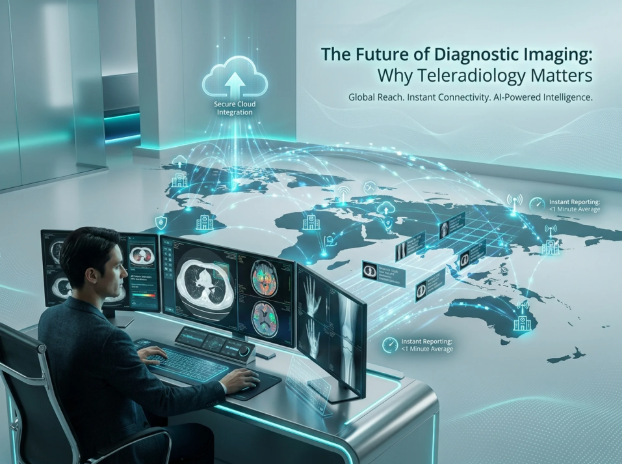
The Changing Landscape of Diagnostic Imaging
Healthcare delivery is no longer confined to physical spaces. Patients today expect faster diagnoses, seamless experiences, and access to quality care regardless of their location.
At the same time, imaging volumes are rising due to increased awareness, preventive screenings, and the growing burden of chronic diseases. While more scans are being conducted, the number of skilled radiologists has not increased at the same pace.
This imbalance leads to delays, particularly in smaller cities and rural areas where access to specialists is limited. Teleradiology addresses this gap by allowing expertise to be delivered remotely, ensuring that patients receive timely and accurate diagnoses.
What Teleradiology Means Today
Teleradiology is no longer just about sending images from one location to another. It has evolved into a comprehensive, technology-driven system that supports end-to-end diagnostic workflows.
Modern teleradiology platforms are cloud-based, secure, and integrated with hospital systems. Radiologists can access high-resolution images, review patient history, and generate reports from anywhere. These reports are then seamlessly shared with clinicians, ensuring continuity in care.
This transformation turns radiology into a connected service rather than a location-bound function.
How Teleradiology Reshapes Workflow Structure and Capacity
Diagnostic imaging has long outgrown the idea of being tied to a single hospital. The bottleneck is no longer access to scanners or software — it is about matching expertise with demand, wherever that demand shows up.
Imaging demand does not grow in a neat, even pattern. Some hospitals and centers are flooded with studies but short on radiologists, while others may have idle capacity sitting unused. In a strictly location-dependent model, there is no easy way to balance this. Studies pile up in one place and expertise sits underused elsewhere. Teleradiology helps smooth that out.
By separating image acquisition from interpretation, it allows workloads to be shared across available radiologists. Cases can be routed based on urgency, complexity, or availability — rather than who happens to be physically closest. This improves turnaround times and makes better use of the radiologists already in the system.
However, teleradiology only works well when implemented thoughtfully. Early setups often relied on standalone systems where scans were moved outside the main workflow — creating extra steps and disjointed information flow. Modern approaches are different. Today, teleradiology is increasingly built into the core imaging workflow itself. When remote reporting lives inside systems like PACS, radiologists work in the same environment whether on-site or remote. Studies are available without manual transfers, clinical context appears alongside images, and reporting tools stay consistent no matter where the user logs in from.
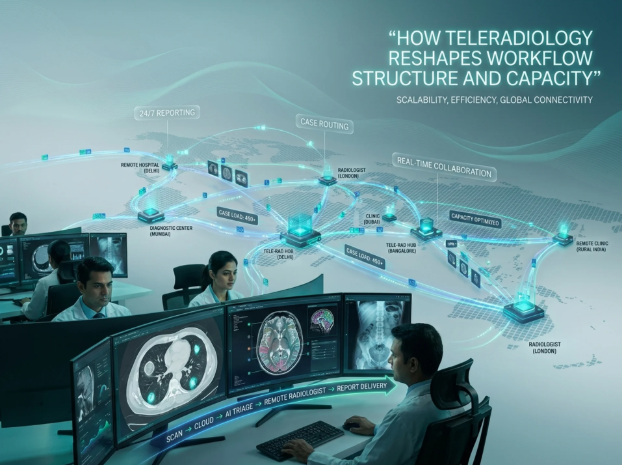
This kind of integration is crucial. Radiology is not just about looking at images — it is about context, coordination, and timely communication with referring teams. When teleradiology lives inside the same system, those elements stay in place. The workflow does not break; it simply adapts to where the radiologist is sitting.
Expanding Access Across Geographies
One of the most important benefits of teleradiology is its ability to expand access. Many diagnostic centers in India have advanced imaging equipment but lack experienced radiologists to interpret scans.
Teleradiology connects these centers with specialists across cities and regions. This eliminates the need for patients to travel long distances for expert opinions and ensures that quality diagnostics are available even in underserved areas.
For healthcare providers, this means the ability to deliver consistent care regardless of location.
Improving Speed and Turnaround Time
Timely diagnosis is critical in healthcare, especially in emergency situations. Teleradiology improves turnaround times by enabling cases to be distributed across a network of radiologists.
Instead of waiting for a specific on-site specialist, scans can be reviewed by the next available expert. This reduces delays and ensures that urgent cases are prioritized and addressed quickly.
In high-volume environments, this flexibility becomes essential for maintaining efficiency.
Enabling Round-the-Clock Services
Providing 24/7 radiology coverage is often challenging for hospitals, particularly smaller ones with limited staff. Teleradiology makes continuous coverage possible without requiring a full team on-site at all times.
Cases can be routed to radiologists working in different shifts or time zones, ensuring that reports are generated even during nights and weekends. This improves patient care and allows hospitals to offer uninterrupted diagnostic services.
Access to Subspecialty Expertise
Radiology is a diverse field, and certain cases require specialized knowledge. Teleradiology enables hospitals to access subspecialists for specific imaging needs, such as neurological, musculoskeletal, or oncological cases.
This improves diagnostic accuracy and ensures that patients benefit from expert interpretation, even if that expertise is not available locally.
For healthcare providers, it enhances the overall quality of care without the need to maintain a large in-house team of specialists.
Integration with Digital Workflows
Teleradiology works best when it is part of a connected digital ecosystem. Integration with imaging systems, reporting tools, and patient records ensures that workflows remain seamless.
Radiologists working remotely can access all relevant data, including prior studies and clinical history. Reports are automatically shared with referring doctors, reducing delays and improving coordination.
Solutions like RadpicsAI are designed to unify these processes, making teleradiology an integral part of everyday operations rather than a separate function.
Cloud Infrastructure, Smart Data Management and Workflow Automation
Cloud-based infrastructure is what makes distributed teleradiology truly practical. By hosting imaging data and applications in the cloud, hospitals can give secure access from multiple locations without needing heavy local infrastructure at every site. Radiologists can log in from different cities, states, or even time zones and still work within a single unified system. Scaling up — adding new users or new sites — becomes much simpler because the underlying architecture does not need to be rebuilt each time.
How imaging data is managed within that infrastructure also matters significantly. Imaging studies are large files, and moving them efficiently is critical. Smart compression and optimisation techniques can shrink file sizes while keeping diagnostic quality intact, which speeds up access and reduces bandwidth strain. In a distributed setup where every location needs to feel fast and responsive, this makes a real operational difference.
Workflow automation becomes equally important as volumes climb. Managing case distribution manually quickly becomes unsustainable at scale. Modern systems can automatically create worklists, prioritize urgent studies, and route cases to available radiologists based on defined rules. This ensures that time-sensitive cases are seen early and that no single radiologist ends up overloaded — keeping the entire distributed network running smoothly and predictably.
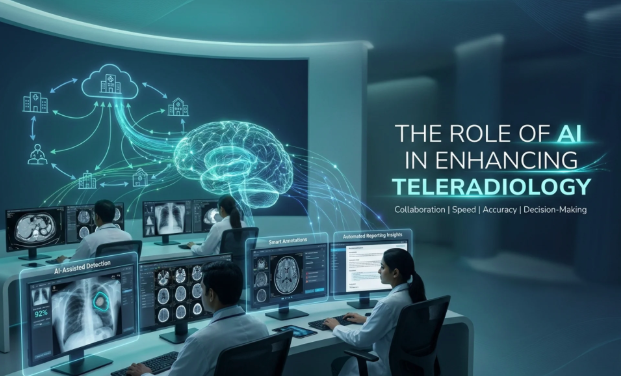
The Role of AI in Enhancing Teleradiology
Artificial Intelligence is playing an increasingly important role in teleradiology. AI tools can analyze imaging data, highlight potential abnormalities, and prioritize critical cases.
For radiologists handling large volumes of cases remotely, this support is invaluable. It helps ensure that urgent findings are not missed and that workflows remain efficient.
AI also assists in generating preliminary insights, allowing radiologists to focus on detailed analysis and decision-making. Together, AI and teleradiology create a more reliable and scalable diagnostic process.
Operational Benefits for Healthcare Providers
Teleradiology offers significant operational advantages for hospitals and diagnostic centers. It reduces dependency on on-site staffing, allowing resources to be used more efficiently.
Hospitals can scale their services without investing heavily in infrastructure or additional personnel. They can also manage fluctuations in case volume by distributing workloads across a broader network.
This flexibility is particularly important for multi-location healthcare providers and growing diagnostic chains.
Ensuring Data Security and Compliance
With the increasing use of digital systems, data security has become a critical concern. Teleradiology platforms are designed with strong security measures, including encryption, secure access controls, and audit trails.
Compliance with healthcare regulations ensures that patient data is handled responsibly. As digital healthcare frameworks continue to evolve in India, secure teleradiology systems will play a key role in maintaining trust and reliability.
The Road Ahead
Teleradiology is not just a solution to current challenges—it is a foundation for the future of diagnostic imaging. As connectivity improves and technology advances, its role will continue to grow.
We can expect deeper integration with AI, better analytics, and more collaborative models of care. Radiology will become increasingly networked, allowing expertise to be shared across institutions and regions. This shift will make healthcare more accessible, efficient, and patient-focused.
Frequently Asked Questions
What is teleradiology and how does it work?
Teleradiology involves transmitting medical images to remote radiologists for interpretation. It uses secure, cloud-based systems that allow specialists to access scans, analyze them, and generate reports from any location.
Is teleradiology accurate and reliable?
Yes, modern teleradiology platforms provide high-quality imaging and access to clinical context, ensuring accurate diagnoses. When combined with experienced radiologists and AI support, reliability is maintained.
How does teleradiology help hospitals in India?
It helps overcome the shortage of radiologists, reduces reporting delays, enables 24/7 services, and provides access to subspecialty expertise, especially in underserved regions.
What role does AI play in teleradiology?
AI supports radiologists by prioritizing urgent cases, detecting abnormalities, and assisting in report generation. It enhances efficiency and reduces the chances of missed findings.
Is patient data safe in teleradiology systems?
Yes, secure platforms use encryption, access controls, and compliance protocols to ensure patient data is protected at all times.
Can small diagnostic centers benefit from teleradiology?
Absolutely. Teleradiology allows smaller centers to access expert radiologists without hiring full-time specialists, making it a cost-effective and scalable solution.