


Radiology has always played a central role in modern medicine. From detecting fractures to diagnosing complex diseases, imaging has been a critical part of clinical decision-making. However, the way radiology workflows operate today is very different from how they functioned even a decade ago.
What was once a largely manual, time-intensive process has now evolved into a technology-driven, intelligent system. This shift is not just about digitization—it is about making radiology faster, more accurate, and more scalable. Platforms like RadpicsAI are at the forefront of this evolution, bringing together AI, automation, and integrated workflows into a unified ecosystem.
The Early Days of Radiology Workflows
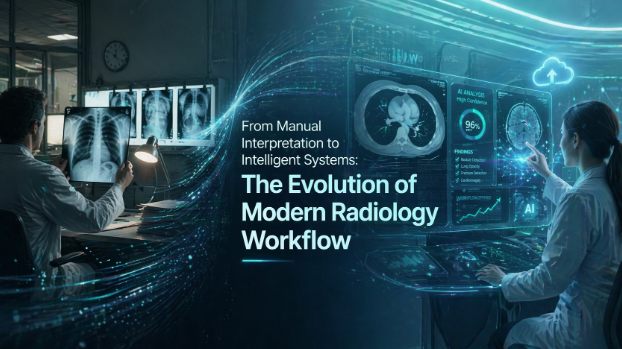
In the earlier days, radiology was heavily dependent on manual interpretation and physical processes. Imaging studies were captured on films, stored in archives, and reviewed using lightboxes. Radiologists dictated or wrote reports, which were then physically shared with clinicians.
This process, while effective at the time, was slow and limited. Accessing previous studies could take hours or even days. Collaboration between departments was minimal, and scaling operations was difficult. The entire workflow depended on human effort at every stage.
As patient volumes began to increase, these limitations became more pronounced, creating the need for more efficient systems.
How Manual Workflows Failed at Scale
The role of theradiologist— reviewing images, piecing together findings, and arriving at a diagnosis — has always been at the heart of the field. What changed was almost everything around it.
Images lived on CDs or film, stored in one place and tied to specific workstations. Access was limited. Reporting was done in an individualised way, with each radiologist or team following their own routines. There was little standardisation, and moving information between systems was slow. A lot of coordination happened through people talking, calling, or physically running between departments.
At low volumes, this kind of setup could work. When the number of studies started going up, the cracks became obvious. Delays crept in between when a scan was taken and when it was reported. Access to images depended on where you were physically sitting. Collaborating across teams or locations was awkward. The workflow limped along, but it was never built to scale.
This growing pressure is what made the shift to digital systems not just useful — but necessary.
The Digital Shift and the Rise of PACS
The introduction of digital imaging and PACS marked the first major transformation in radiology workflows. Images could now be stored electronically and accessed through computers, eliminating the need for physical films.
This change significantly improved accessibility and reduced turnaround times. Radiologists could review images more efficiently, apply basic tools for better visualization, and retrieve past studies with ease.
However, while PACS improved storage and access, it did not fully solve workflow inefficiencies. Reporting remained time-consuming, and coordination between systems still required manual effort. The next stage of evolution focused on connecting these systems.
Integration as the Foundation of Modern Workflows
As healthcare systems became more complex, the need for seamless integration became clear. Radiology workflows needed to connect with patient records, scheduling systems, and clinical data.
The integration of PACS with RIS and HIS created a more unified environment. Patient information could flow across systems, reducing duplication and improving coordination. Radiologists gained access to relevant clinical context, enabling more accurate interpretations.
This connected approach laid the groundwork for the next major shift—introducing intelligence into workflows.
The Emergence of Intelligent Systems
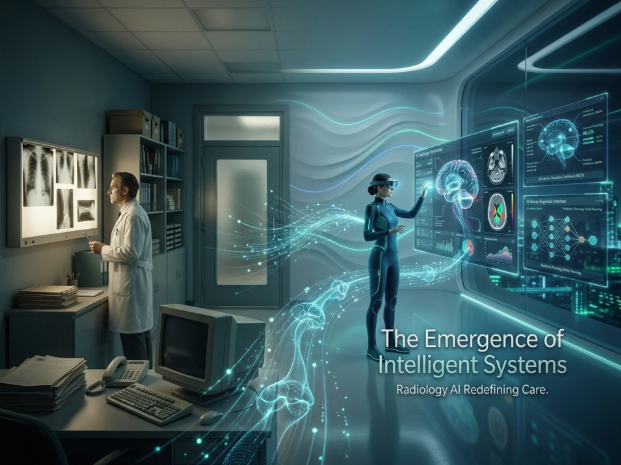
Modern radiology workflows are defined by intelligence. Artificial Intelligence has transformed systems from passive tools into active participants in the diagnostic process.
AI can analyze imaging data, detect patterns, and highlight areas that require attention. It supports radiologists by reducing the time spent on repetitive tasks and helping them focus on critical cases.
For instance, intelligent systems can prioritize urgent scans, ensuring that critical findings are addressed first. They can also assist in generating structured reports, improving both speed and consistency.
This transition from manual interpretation to intelligent assistance is reshaping how radiology operates on a daily basis.
AI Only Delivers When It Is Embedded, Not Standalone
Intelligent workflows are not about a single shiny technology. They are about how different capabilities — automation, data management, and decision support — fit together within the same system.
Artificial intelligence is part of this story, but its impact depends heavily on how it is used. When AI is treated as a standalone tool, it becomes one more layer to manage. When it is embedded into the core systems, it becomes part of how the workflow actually works.
In modern radiology environments, AI can help by prioritising cases, flagging potential findings, and supporting the reporting process. It can look at incoming studies, highlight areas of interest, and organise worklists based on urgency or complexity. This does not take away the radiologist's role — it changes how their time is spent. Instead of getting bogged down in tedious tasks or chasing information across different systems, radiologists can focus more on actual interpretation and clinical decision-making.
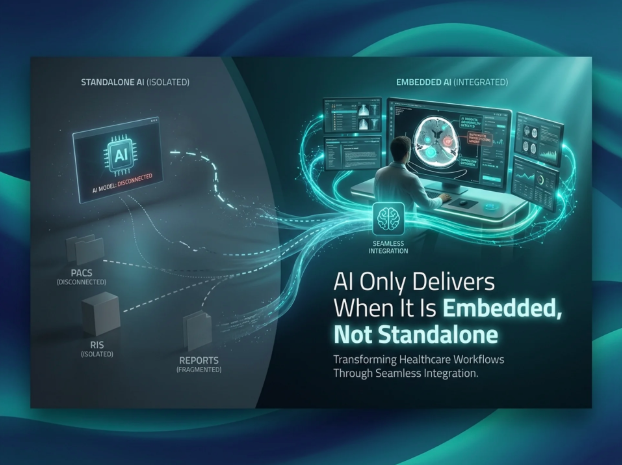
The workflow becomes more efficient not because steps are removed, but because they are arranged in a way that makes more sense. And that arrangement only holds together when the underlying systems are connected — because intelligent tools depend on integrated data to be genuinely useful. Without that level of integration, even the most advanced technologies struggle to deliver consistent value. They become islands of innovation in a sea of disconnected processes.
Improving Efficiency Without Increasing Workload
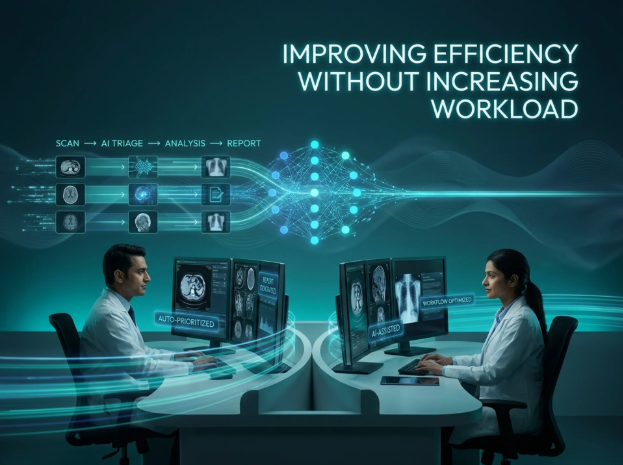
One of the biggest challenges in radiology today is managing increasing volumes without overwhelming teams. Intelligent workflows address this by optimizing how work is distributed and processed.
Automation plays a key role here. Tasks such as case allocation, workflow progression, and report formatting can be handled by the system. This reduces the need for manual intervention and ensures that processes move smoothly.
Radiologists are able to handle more cases without compromising on quality. At the same time, the reduced administrative burden helps lower fatigue and improve overall productivity.
Data as a Driving Force
Modern radiology systems generate large amounts of data, and this data is now being used to improve workflows. Intelligent platforms provide insights into performance metrics such as turnaround times, case volumes, and reporting patterns.
These insights allow healthcare providers to identify inefficiencies and make informed decisions. Workflows can be adjusted based on real-time data, ensuring continuous improvement.
Data-driven radiology is becoming a key differentiator, enabling hospitals to operate more efficiently and deliver better outcomes.
The Role of Cloud and Remote Access
Cloud technology has further accelerated the evolution of radiology workflows. It enables secure access to imaging data from any location, supporting remote reporting and collaboration.
Radiologists are no longer restricted to a single workstation. They can access cases from multiple centers, collaborate with peers, and provide timely reports regardless of location.
This flexibility is particularly important in addressing the shortage of radiologists and ensuring that expertise is available where it is needed most.
Standardization and Quality Consistency
As workflows become more advanced, maintaining consistency becomes essential. Intelligent systems support this through structured reporting and standardized templates.
These tools ensure that reports are uniform, clear, and aligned with clinical expectations. They also reduce variability between different radiologists, improving overall quality.
Consistency is especially important in high-volume environments, where even small variations can lead to inefficiencies or misunderstandings.
The Future of Radiology Workflows
The evolution of radiology is far from complete. The future will likely see deeper integration between imaging, clinical data, and predictive analytics.
AI will continue to become more advanced, offering deeper insights and supporting more complex decision-making. Workflows will become increasingly automated, allowing radiology teams to focus on high-value tasks.
Platforms like RadpicsAI are already moving in this direction, offering solutions that combine imaging, AI, and workflow management into a single, scalable platform.
Frequently Asked Questions
What is meant by intelligent radiology workflows?
Intelligent radiology workflows refer to systems that use AI, automation, and integration to streamline imaging processes. These workflows assist in tasks like case prioritization, report generation, and data analysis, making radiology more efficient and accurate.
How is AI changing radiology workflows?
AI is helping radiologists by analyzing images, identifying potential abnormalities, and automating repetitive tasks. This reduces workload, improves turnaround time, and enhances diagnostic accuracy.
Are intelligent systems replacing radiologists?
No, intelligent systems are designed to support radiologists, not replace them. They act as decision-support tools, allowing radiologists to focus on complex cases and clinical judgment.
What role does cloud technology play in modern radiology?
Cloud technology enables remote access to imaging data, supports collaboration, and allows systems to scale easily. It is essential for teleradiology and multi-location healthcare operations.
Why is workflow integration important in radiology?
Integration ensures that patient data, imaging studies, and reports flow seamlessly across systems. This reduces errors, saves time, and improves coordination between departments.
How can healthcare providers adopt modern radiology workflows?
Healthcare providers can start by investing in integrated platforms that combine PACS, AI, and workflow automation. Choosing scalable and user-friendly solutions ensures smoother adoption and long-term benefits.
How does RadpicsAI integrate AI into existing workflows?
RadpicsAI embeds AI directly into the core radiology workflow rather than functioning as a separate tool. It integrates with existing systems like PACS and RIS to enable features such as automated case prioritization, real-time image analysis, and structured reporting. This seamless integration ensures minimal disruption, improves efficiency, and allows radiologists to leverage AI insights within their regular workflow.